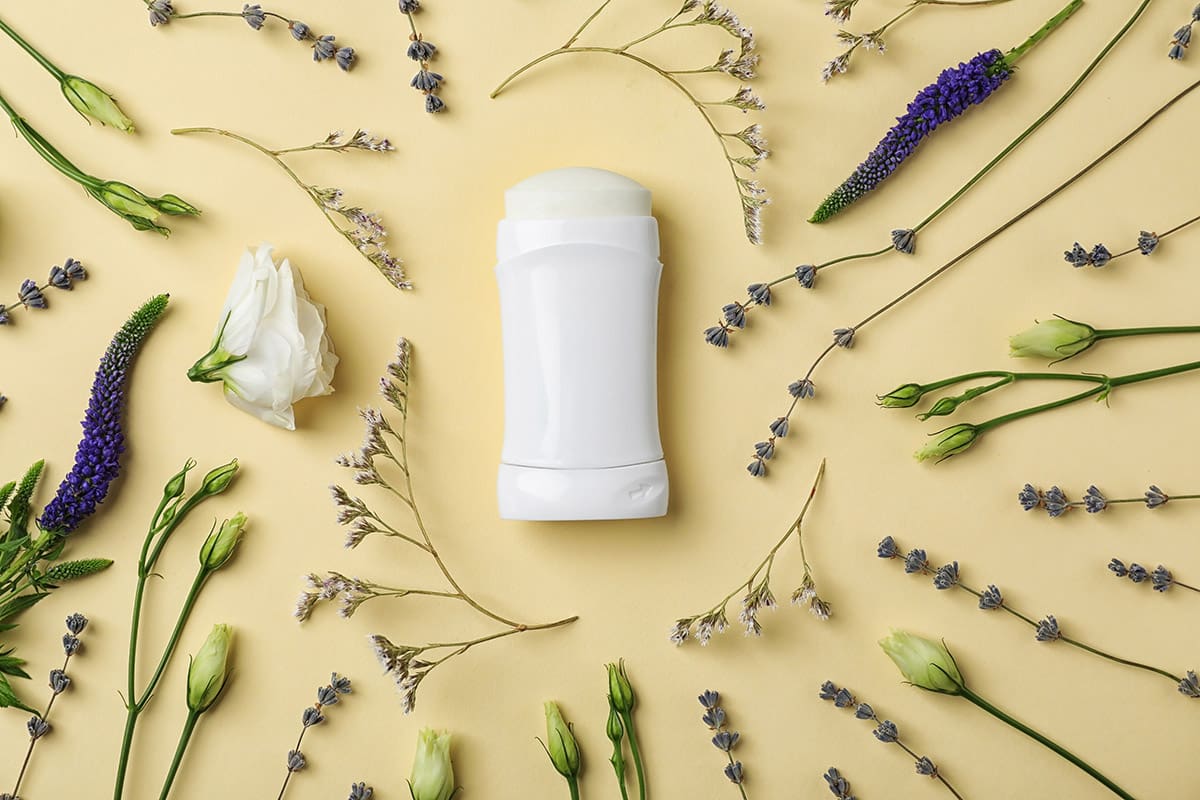
Many factors contribute to long-term optimal health, including clean eating and consistent exercise, but the products we use on our bodies every day are also an important part of the conversation. The personal care industry in the United States is not as strictly regulated as many consumers may assume, and beauty companies are not always required to disclose certain proprietary ingredients. Many potentially harmful chemicals, potential carcinogens, and drying agents can be found in conventional soaps, lotions, shampoos, cosmetics, and deodorants.
Although our skin works hard to provide a protective barrier, some topical skin products can be absorbed through the skin and into the bloodstream. This makes it all the more important to choose personal care products carefully, including natural deodorant. Here’s a breakdown of deodorants and antiperspirants and why some people choose to avoid conventional options:
Deodorants
Deodorants help kill bacteria on the skin and cover up offending odors. Conventional deodorants may contain parabens, triclosan, phthalates, and aluminum compounds to accomplish this. The product’s scent, or fragrance, is also designed and added to conceal body odor.
The problem with conventional deodorants:
- Parabens, triclosan, and phthalates are all synthetic chemicals that may disrupt natural hormones produced by the body. Aluminum, a heavy metal, has raised health concerns and has been studied in relation to several health conditions, such as breast cancer and Alzheimer’s disease, to name a few.
- As for the fragrance, it isn’t made up of just one chemical. According to the Environmental Working Group (EWG), there are over 3,100 stock chemicals in the fragrance industry, many of which may pose long-term health risks, such as organ system toxicity and allergic reactions, and still need additional testing for safety.
Antiperspirants
Antiperspirants block sweat. Most use aluminum-based compounds to stop the pores from producing sweat. Some antiperspirants may also contain ingredients such as propylene glycol, which can cause skin irritation in sensitive individuals.
The problem with conventional antiperspirants:
- Sweating is a natural bodily function that helps regulate temperature and supports the body’s normal elimination processes. Daily use of aluminum and aluminum derivatives may interfere with this natural process. And because the body does not naturally produce aluminum, overexposure to this metal can be a concern.
Big Picture Takeaways
1. Avoid most major conventional deodorant and antiperspirant brands, especially those made with aluminum compounds, synthetic fragrance, parabens, phthalates, triclosan, or other harsh synthetic chemicals. While these products are widely available and heavily marketed, they often contain ingredients that many people choose to avoid in a more natural personal care routine. Reading ingredient labels is one of the best ways to identify and avoid these questionable ingredients.
2. Natural deodorants avoid many synthetic chemicals and typically use safer, naturally derived ingredients, making them a better option for people seeking more natural personal care options. However, not all natural deodorants are created equal. Though many claim to be free of harsh synthetic chemicals, some crystal stone deodorants contain potassium alum or ammonium alum, both of which are aluminum salts, meaning they are not completely aluminum-free.
3. Great strides have been made by the natural personal care industry to provide safer and more effective products, including healthier alternatives to conventional deodorants and antiperspirants. These options are now widely available in stores and online. No matter what you choose, it is best to avoid antiperspirants in general, avoid deodorants with aluminum or alum listed in the ingredients, and look for products made with naturally derived ingredients such as arrowroot powder, aloe, activated charcoal, baking soda if tolerated, and essential oils or natural fragrance.
4. Remember, you may have to experiment with a few natural brands to find the one that works best for you. You can also use the Environmental Working Group’s Skin Deep Cosmetic Database as a resource for selecting natural deodorants and other personal care products.
Read our Preventive 10 for more practical, natural lifestyle suggestions to support optimal long-term health.
Editor’s Note: This article was originally published on May 20, 2015, and was updated on July 22, 2026.
Sources And References
Mercola, J. (2013, November 27). Is Your Perfume Poison? articles.mercola.com. Retrieved February 24, 2015, from http://articles.mercola.com/sites/articles/archive/2013/11/27/toxic-perfume-chemicals.aspx
Environmental Working Group. (2010, May 12). Not So Sexy: Hidden Chemicals in Perfume and Cologne. ewg.org. Retrieved February 24, 2015, from http://www.ewg.org/research/not-so-sexy
Mercola, J. (2010, February 16). Stop Using “Natural” Deodorants Until You Read This. articles.mercola.com. Retrieved February 24, 2015, from http://articles.mercola.com/sites/articles/archive/2010/02/16/aluminum-lurks-in-crystal-deodorants.aspx
Sappino, A. P., et al. (2012, March). Aluminum chloride promotes anchorage-independent growth in human mammary epithelial cells. ncbi.nlm.nih.gov. Retrieved April 9, 2019, from https://www.ncbi.nlm.nih.gov/pubmed/22223356
Inouye, B. (2021, August 10). On Protecting Consumers from Toxics in Cosmetics, U.S. Lags at Least 80 Countries. ewg.org. Retrieved July 22, 2026, from https://www.ewg.org/news-insights/news/2021/08/protecting-consumers-toxics-cosmetics-us-lags-least-80-countries