We know that eating healthy food is important for long-term health, but did you know that what cookware you use to cook your food can also have a significant impact on your health? Most cookware that is used today leaches harmful chemicals into our food. It is important that we use safe, healthy cookware that doesn’t negatively affect the food we eat and as a result promotes overall good health.
Why is choosing safe cookware so important?
Choosing safe cookware is one way you can protect your long-term health. Some materials used in cookware can release toxic chemicals into the air or your food. While small amounts of these toxins can be tolerated by most people, over time, they can build up in the body and contribute to significant health problems.
One of the most significant innovations in cookware over the last century was the invention of the Teflon-coated non-stick pan. The first one hit the market in 1961, and it didn’t take long for them to become a popular kitchen staple.
Unfortunately, later research found that non-stick pans can emit PFAS (per-and polyfluoroalkyl substances) also called forever chemicals. They earned this name because they don’t break down easily in the environment or the human body, meaning they can persist for decades. potentially contributing to a range of health problems.
That said, when it comes to safe cookware, a non-stick coating is just one of the things you should consider. Other materials can increase the risk of toxic metal exposure and can increase the risk of various illnesses. Plus, certain factors, such as how you use your cookware and its age, can even safe pans hazardous.
Cookware to avoid
Non-stick pans and the forever chemicals that come with them are not the only things to consider when looking for safe cookware. Here are some things to avoid.
Aluminum
Many people choose aluminum cookware because it’s affordable and durable, but research has found that aluminum cookware can be highly contaminated. One analysis determined that aluminum cookware contained significant levels of lead, with new aluminum cookware actually leaching more than older models.
While lead is undoubtedly a concern, the aluminum exposure from this type of cookware can also cause long-term health issues. Aluminum impacts many parts of the body. For example, it accumulates in the parathyroid gland, where it can reduce the amount of calcium in the blood, affecting bone strength.
Aluminum can also impact the liver, ultimately depleting iron and contributing to the accumulation of fat in liver cells, which may lead to several diseases, including type 2 diabetes and obesity.
Copper
Copper cookware can be safe if used properly, but there are some things to consider.
Lined copper cookware is generally safe. It typically has either a thick functional layer of copper or a thin decorative one on the exterior and a cooking surface lined with tin. Tin has some natural non-stick properties, and it doesn’t react with acidic foods, making lined copper pans a safer choice.
That said, unlined copper pans have a copper cooking surface, which can leach the metal into foods. This leaching can also occur if the cooking surface of a lined copper pan is damaged and the underlying copper is exposed.
Most cases of copper toxicity result from accidental consumption, often from acidic foods cooked in uncoated copper cookware. Signs of copper toxicity can include abdominal pain, upset stomach, headache, and altered state of mind. Severe cases can lead to heart and kidney failure, liver damage, and brain dysfunction.
Nonstick pans with forever chemicals: PTFE or PFOA
Perfluorooctanoic acid (PFOA) and polytetrafluoroethylene (PTFE) are two types of chemicals, also known as forever chemicals, often used in non-stick pans.
PFOA has been largely phased out in the United States. It has been shown to have profound impacts on the body and can contribute to a variety of health issues, including attention deficit hyperactivity disorders, autism spectrum disorder, hearing impairments, hypertension, coronary artery disease, vascular dementia, obesity, infertility, osteoporosis, immune dysfunction, and some forms of cancer.
PTFE is still in use and generally considered safe when used within the manufacturer’s guidelines, but research suggests that it may have health impacts, too. PTFE may release microplastics into food, and when overheated, can emit fumes that can cause mild flu-like symptoms, commonly referred to as Teflon flu.
Ceramic Coated Cookware
Ceramic-coated cookware offers a smooth, nonstick surface and is often made without PTFE and PFAS chemicals found in Teflon nonstick surfaces. However, the coating tends to wear out relatively quickly, especially when exposed to high heat or frequent use and as this coating degrades, the pan loses its nonstick properties and may shed particles that are not good for long term health.
Damaged cookware
Cookware that is scratched or damaged is more likely to release toxins into your food and should be thrown away. You should also be cautious with pans that are overheated as temperatures above the manufacturer’s recommendations can cause the coatings to break down, releasing harmful particles.
Cookware that is the safest
If you’re looking for safe cookware, consider these options.
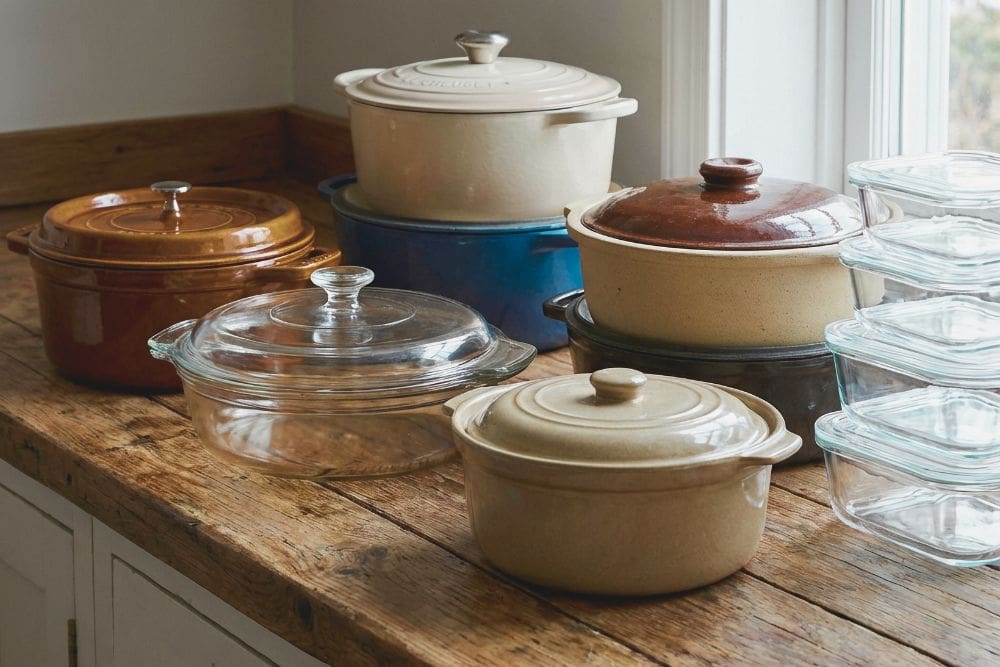
Clay
Clay cookware is one of the oldest cooking materials in human history and has been used for thousands of years across cultures in Africa, Asia, the Middle East, and the Americas. Its natural ability to cook food slowly and evenly while retaining moisture made it especially well-suited for traditional dishes such as stews, grains, and breads. These qualities are still valued today by people seeking more natural cooking methods.
When properly made, clay cookware can be a safe and non-toxic option for food preparation. The primary safety concern is not the clay itself, but the potential presence of lead or other heavy metals in glazes or in poorly sourced materials. Reputable modern manufacturers test their clay cookware to ensure it is lead-free, cadmium-free, and safe for food use.
Look for cookware that is clearly labeled as food-safe and avoid decorative pottery that is not intended for cooking. Brightly colored or glossy glazes should only be used if they are certified lead-free. Cracked or chipped pieces should not be used, as damage can increase the risk of contamination or breakage. Proper use and care, including avoiding sudden temperature changes, helps maintain both safety and durability. When sourced carefully and used correctly, clay cookware remains a time-tested and effective option for natural cooking.
Pure Ceramic (Not ceramic coated)
Pure ceramic cookware is generally considered a safe option. This type of cookware is made of kiln-fired clay. It’s extremely durable and can last for decades, but it tends to be pretty expensive.
Because of the high cost of pure ceramic cookware, some people may be drawn to ceramic coated cookware. This type has a metal core, usually aluminum, with a ceramic coating. While ceramic coatings are a better option than a traditional non-stick pan, you should still be cautious about using ceramic-coated cookware. If the aluminum core is exposed, it may leach contaminants into your food.
Cast iron
People have been using cast iron cookware for centuries. In fact, some evidence shows that cast iron may have been invented in China since the 8th century B.C.
Cast iron cookware is a great choice because it doesn’t have any artificial coatings, retains heat well, and is nearly indestructible. When properly seasoned, it develops natural non-stick properties, too, but it may be a good idea to avoid sticky foods with a new pan or skillet until the seasoning layer is properly established.
Be cautious – cast iron can leach iron into food so its best to have your medical provider check iron levels if using this cookware. Generally, well-seasoned cast iron cookware, food comes into contact with the seasoning layer, not the iron, which should limit the amount of leaching.
Glass
Glass cookware is a safe choice for many reasons. There is no coating to worry about, and glass doesn’t react with acidic foods.
Many people might be familiar with glass casserole dishes and other cookware that goes into the oven, but glass pots and pans are available, too. Some people like them because they allow you to see inside and easily monitor what you’re cooking. However, there are some things to keep in mind. Glass is more delicate than other types of cookware. It can break with sudden temperature changes or high temperatures.
Stainless steel
Stainless steel has plenty of features that make it ideal in the kitchen. It’s durable, easy to clean, and has superior heat distribution. Low quality stainless steel may leach other metals, like cadmium and nickel, into food, particularly when cooking acidic foods. When choosing stainless steel cookware, look for high-quality food-grade options like 18/10 or 304 stainless steel. These grades are non-reactive, corrosion-resistant, and won’t leach harmful metals into your food, making them a safe and durable choice for healthy cooking
Carbon Steel
Carbon steel is a safe and versatile cookware choice, often favored by professional chefs for its durability and high-heat performance. Like cast iron, it’s free from chemical coatings and becomes naturally nonstick when properly seasoned. Pros include excellent heat retention, quick heating, and long lifespan. However, it requires regular seasoning to prevent rust, to react with acidic foods, and needs careful maintenance compared to stainless steel. With proper care, carbon steel offers a healthy, long-lasting option for frying, sautéing, and even baking.
Big Picture Takeaways
- View the quality and safety of your cookware as important as the quality of your food.
- Avoid all traditional nonstick products (i.e., Teflon) and all newer nonstick products like ceramic coatings
- Invest in high quality safe cookware like the options listed above. Safe, healthy cookware made from durable materials like stainless steel or cast iron can last for decades—often a lifetime—when properly cared for, making it a smart and sustainable investment for any kitchen.
- Different materials are better for different uses. Use the below list as a helpful, safe guide:
Cooking Type Best Materials High heat/searing Cast iron, Carbon steel Sautéing Carbon steel, Cast iron Slow cooking Clay, Pure ceramic Baking Glass, Pure ceramic, Clay Roasting Cast iron, Stainless steel Acidic foods Stainless steel, Glass Food storage Glass, Pure ceramic
Sources And References
Ali Sultan, S. A., Khan, F. A., Wahab, A., Fatima, B., Khalid, H., Bahader, A., Safi, S. Z., Selvaraj, C., Ali, A., Alomar, S. Y., & Imran, M. (2023). Assessing Leaching of Potentially Hazardous Elements from Cookware during Cooking: A Serious Public Health Concern. Toxics, 11(7), 640. https://doi.org/10.3390/toxics11070640
Cole, M., Gomiero, A., Jaén-Gil, A., Haave, M., & Lusher, A. (2024). Microplastic and PTFE contamination of food from cookware. Science of The Total Environment, 929, 172577. https://doi.org/10.1016/j.scitotenv.2024.172577
Correia, M. S., & Horowitz, B. Z. (2022, March 27). Polymer Fume Fever. StatPearls. Retrieved May 31, 2025, from https://www.ncbi.nlm.nih.gov/books/NBK594276/
Molinek, Rudy (2024, August 20). The Long, Strange History of Teflon, the Indestructible Product Nothing Seems to Stick to. Smithsonian Magazine. Retrieved May 29, 2025, from https://www.smithsonianmag.com/science-nature/the-long-strange-history-of-teflon-the-indestructible-product-nothing-seems-to-stick-to-180984920/
Environmental Protection Agency (2024, October 3). PFAS Explained. Retrieved May 31, 2025, from www.epa.gov/pfas/pfas-explained
Environmental Protection Agency (2024, November 26). Our Current Understanding of the Human Health and Environmental Risks of PFAS. Retrieved May 31, 2025, from https://www.epa.gov/pfas/our-current-understanding-human-health-and-environmental-risks-pfas
Qian, W., & Huang, X. (2021). Invention of cast iron smelting in early China: Archaeological survey and numerical simulation. Advances in Archaeomaterials, 2(1), 4-14. https://doi.org/10.1016/j.aia.2021.04.001
Rahimzadeh, M. R., Rahimzadeh, M. R., Kazemi, S., Amiri, R. J., Pirzadeh, M., & Moghadamnia, A. A. (2022). Aluminum Poisoning with Emphasis on Its Mechanism and Treatment of Intoxication. Emergency Medicine International, 2022(1), 1480553. https://doi.org/10.1155/2022/1480553
Royer, A., & Sharman, T. (2022, March 27). Copper Toxicity. Statpearls. Retrieved May 31, 2025, from https://www.ncbi.nlm.nih.gov/books/NBK557456/
Wee, S. Y., & Aris, A. Z. (2023). Environmental impacts, exposure pathways, and health effects of PFOA and PFOS. Ecotoxicology and Environmental Safety, 267, 115663. https://doi.org/10.1016/j.ecoenv.2023.115663